
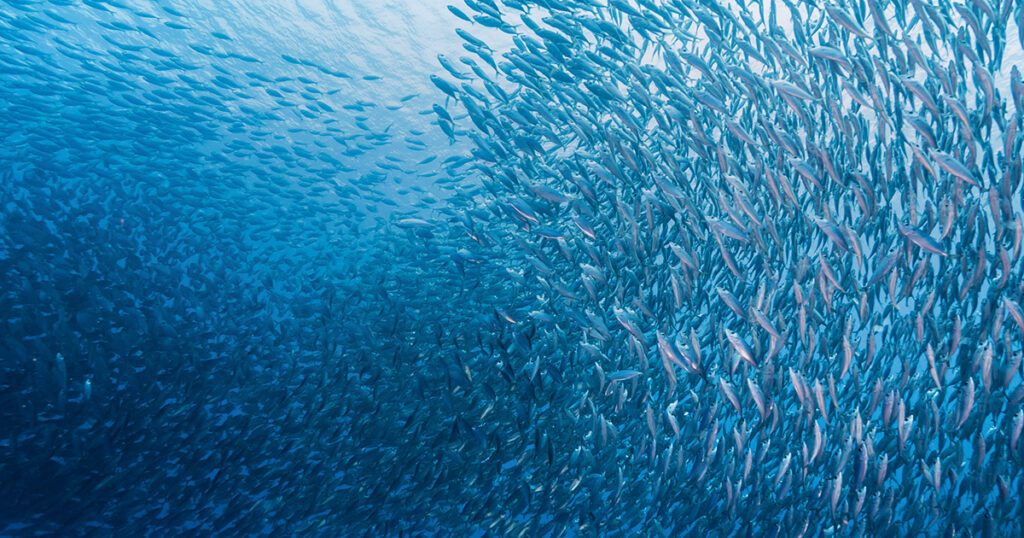
MSC certification supports access to international markets, encourages sustainable fishing practices, protects marine biodiversity and safeguards coastal and small-scale fishing livelihoods.
by Blue Africa News
The Namibia hake fishery has secured its second Marine Stewardship Council (MSC) certification, reinforcing its role in meeting global demand for sustainably sourced whitefish, while safeguarding local livelihoods and marine biodiversity.
The hake is reportedly the most important fish in Namibia, playing a leading role in the fisheries sector in the country. The hake industry (comprising Merluccius capensis and M. paradoxus species) provides jobs to thousands of Namibians, including both seagoing personnel as well as those involved in onshore processing.
According to frontiersin.org, fish and fishery products contributed N$10 billion ($608.4 million) in export value and yielded 501,387 metric tonnes in 2020.
That year, the Namibia hake trawl and longline fishery targeting Merluccius capensis and M. paradoxus became the first fishery in Namibia to meet the globally recognised, science-based standard for sustainable fishing, set by MSC. The Council works with fisheries around the world to combat overfishing.
This month, the fishery achieved its second MSC certification after a rigorous, independent assessment led by Control Union (UK) Limited, which examined the hake stocks, and the fishery’s management processes and ecosystem impacts.
According to Matti Amukwa, chair of Namibian Hake Association, the latest certification follows years of hard work geared toward creating a profitable fishing industry in the Southern Africa country.
“Since the country’s Independence, the government, scientists and industry have worked hand-in-hand to rebuild the hake resource and create a profitable fishing industry that gives back to people and the environment. Achieving MSC certification, first in 2020 and now, has been a team effort and provides assurance to the world that we are committed to the sustainability of Namibian hake,” said the chair, in a media release shared by MSC.
MSC was satisfied with the country’s fish stock rebuilding plan, with the fishery having implemented a clear harvest strategy that includes catch targets set in line with scientific advice.
“We applaud the Namibian Hake Association (NHA), the Ministry and their partners for securing their second MSC certificate. What has been very positive in the case of Namibia is not only the stakeholder collaboration within the country, but also the cooperation with external experts and other stakeholders operating on the same resource,” said MSC Program Director for Africa, the Middle East and South Asia, Michael Marriott.
“There is a drive to improve, to explore new technological innovations, and a commitment to safeguard the hake resource for the future.”
The hard work, stakeholders say, does not end with the second certification. Supported by the MSC’s Ocean Stewardship Fund, the Namibian hake fishery is working with international bio-acoustic expert, Dr. Thomas Götz, and sound technology manufacturers, GenusWave, to test and deploy targeted acoustic startle technology (TAST) to safely deter seals from hake fishing boats.
On the other hand, processors say the certification gives Namibian hake a competitive edge, helping to meet the demand in existing markets, as well as expand into new markets.
“Our hake has gained very much in popularity over the last few years, and I think one of the main reasons is that the resource is certified as sustainable and we can show this with the MSC’s ecolabel on our products. Since the first certification, we have gained access to several new, high-value markets and are known in Europe, and elsewhere, for our quality hake, and good environmental and ethical practices,” noted Tristan Przybylski of Seawork Fish Processors.
Besides Namibia, South Africa, Senegal, Gambia and Morocco are among other African countries certified by MSC.
The certification supports access to international markets, encourages sustainable fishing practices, protects marine biodiversity and safeguards coastal and small-scale fishing livelihoods, serving as a standard for improvement, for African fisheries.
Oliver Ochieng, Blue Africa News