

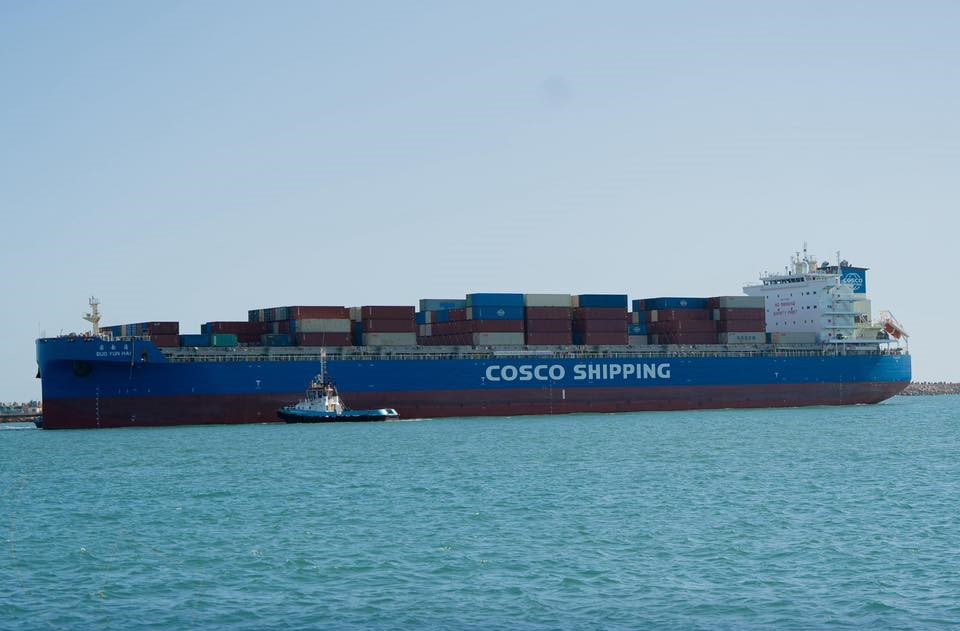
The direct maritime between China and Libya will reinforce the north African nation’s role as a strategic corridor for international trade, and further establish the port of Misrata Free Zone as a key gateway for commercial flows between Africa and Asia.
By Blue Africa News
Libya’s Misrata Free Zone (MFZ) is making waves in North Africa, after receiving the first container vessel operated by COSCO shipping, the Chinese state-owned multinational marine transportation service corporation.
Arrival of the vessel christened “Guo Yun Hai,” at the Misrata Free Zone port on May 6, 2026 marked the launch of a direct maritime route linking China and Libya, cutting off transshipments through intermediary ports.
The new shipping line, announced MFZ in a media statement, represents a major development for Libya’s container transport sector, as most cargo from the Far East had previously relied on transshipment through intermediary ports, leading to longer transit times and higher costs. Traditionally, the Far East refers to East Asia and Southeast Asia, with key countries including China, Japan, Korea, Thailand and Vietnam.
Built in 2026, the nearly 300-metre-long Guo Yun Hai vessel docked at the MFZ port carrying 1,000 containers, with offloading paving space for loading of another 1,000 containers for export.
“The route operates under the North Africa express service and is expected to significantly enhance maritime shipping services by reducing transit times and bypassing traditional transshipment hubs, thereby improving cargo movement and opening broader opportunities for trade between Africa and Asia,” said MFZ.
“The direct maritime link is expected to support Libya’s economy, reinforce the country’s role as a strategic corridor for international trade, and further establish the Port of Misrata Free Zone as a key gateway for commercial flows between Africa and Asia.”
COSCO in a separate statement said the new route is expected to support more reliable and flexible regional supply chains, while expanding trade opportunities between Libya and international markets.
Before its arrival in Misrata, the vessel made a stop at the Port of Benghazi, where 209 containers were discharged and approximately 250 containers loaded as part of its operational route.
The line is expected to operate two voyages per month using a modern fleet of vessels, courtesy of support from COSCO line’s local maritime agent, Bihar Al Alam shipping agencies company.
As home to Libya’s largest and busiest commercial seaport responsible for approximately 60% of the nation’s non-oil trade volume, MFZ is a thriving hub that offers an optimal investment environment for local and international investors.
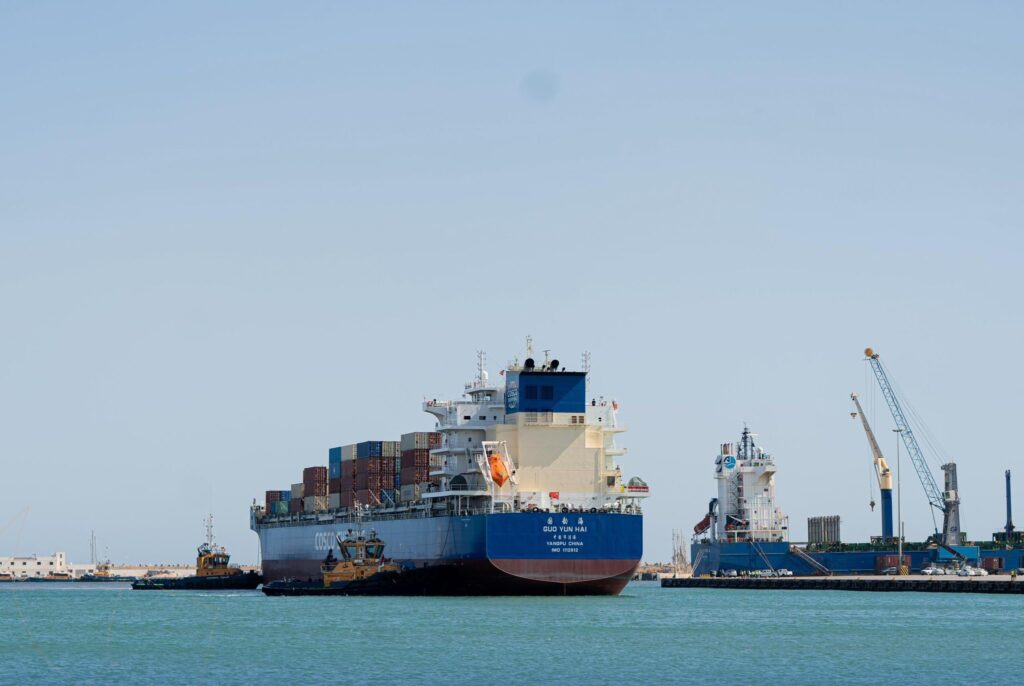
COSCO’s “Guo Yun Hai,” vessel docks at the Misrata Free Zone port in Libya on May 06, 2026. Photo courtesy: MFZ
Libya borders the Mediterranean Sea to the north, which explains why it carries out its international maritime trade and commerce through its numerous ports and oil terminals.
Besides MFZ port and Benghazi, other major ports in Libya include Tripoli and Marsa-El Brega/ Al-Braiga and Al Khoms. Tripoli is the country’s premier port besides being Libya’s commercial and manufacturing hub.
Tripoli is widely known for the manufacture of carpets, cigarettes and chemicals, alongside fish and livestock products which are exported within the north Africa region and beyond through the port of Tripoli. It is known for general cargo shipments.
The Benghazi port, according to marineinsight.com, is a commercial facility housing industrial units like oil refineries, food, salt processing, cement making, breweries, tanneries and fishing. In addition, it houses one of the world’s biggest water desalinisation plants, providing fresh water to most of Libya’s cities. The port is connected to major cities in north Africa by roadways.
Marsa-El Brega/Al-Braiga on the other hand is known for handling oil, petrochemical and general cargo shipments, frequented by 300 ships every year.
Oliver Ochieng, Blue Africa News


