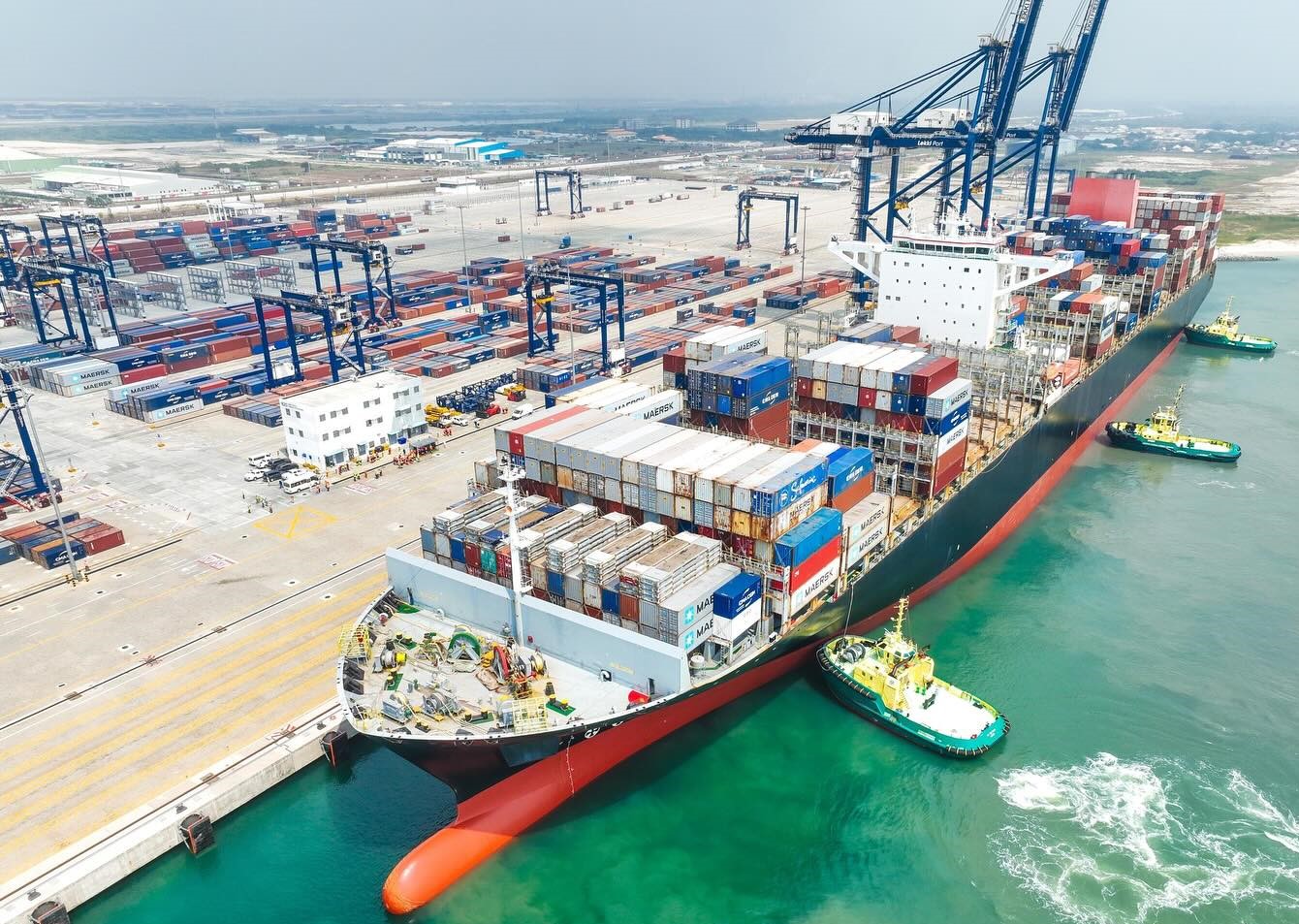

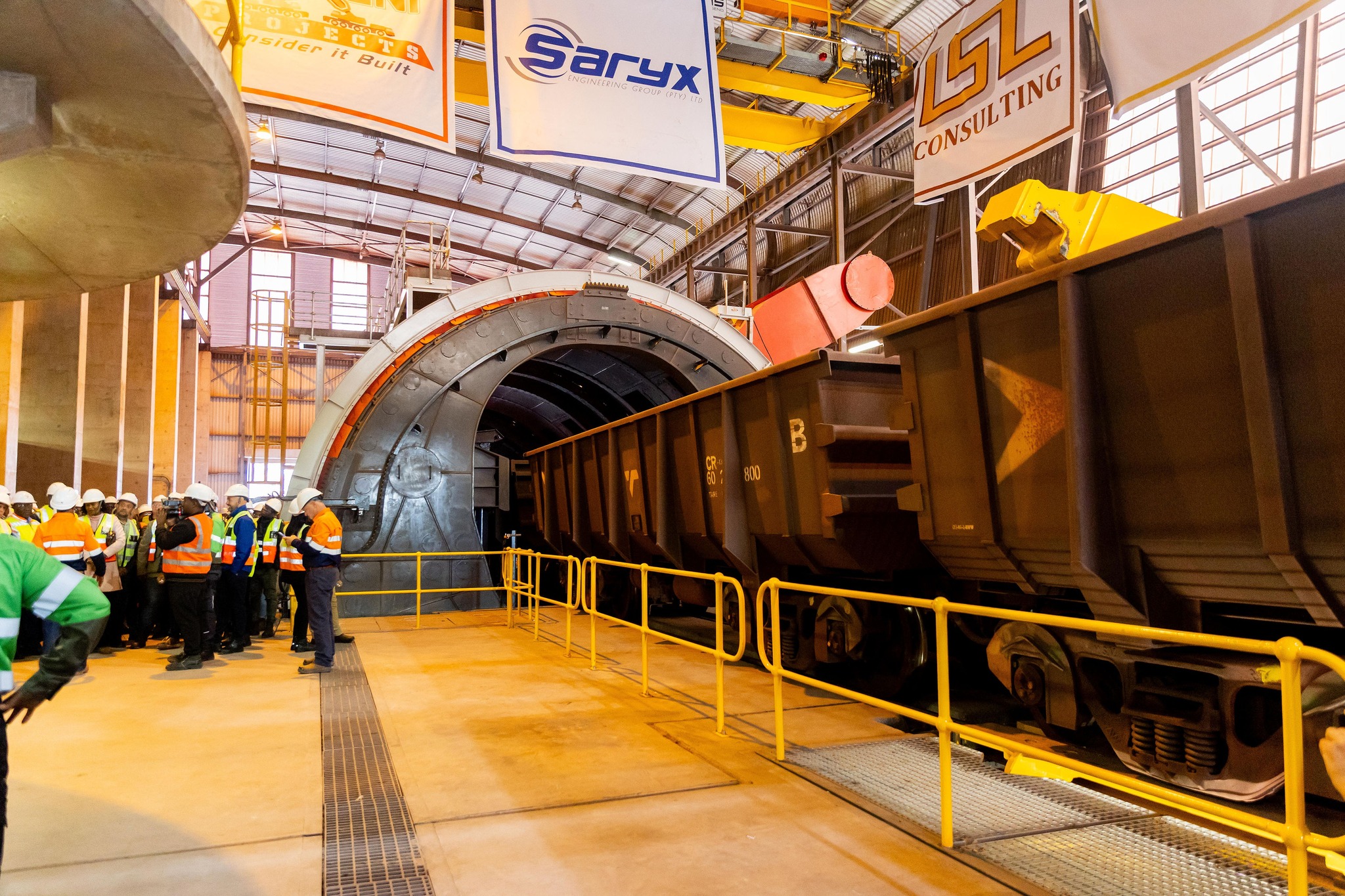
Saldanha Iron Ore Terminal has grown into a strategic national asset that handles approximately 96% of South Africa’s iron ore exports.
By Blue Africa News
South Africa’s state-owned logistics operator Transnet has completed the installation of tippler 3 at the Saldanha Iron Ore Terminal, bringing to life the R4 billion (approximately US$245 million) Saldanha infrastructure upgrade project.
A tippler is essentially an industrial machine used to quickly and safely unload bulk materials like iron ore from railway freight trucks into underground hoppers.
With testing and commissioning beginning on June 03, 2026, the move aims at modernising terminal operations at Saldanha Iron Ore Terminal – Africa’s largest iron ore export facility.
Transnet officials say it represents a critical step in the operator’s infrastructure modernisation journey, and commitment to restoring operational excellence, strengthening export corridors and positioning South Africa as a globally competitive supplier in the mining and bulk logistics sector.
Group Chief Executive Michelle Phillips said that the tippler 3 is more than a capital investment. “It is an investment in operational excellence, customer confidence, economic growth and South Africa’s future competitiveness,” she noted.
Saldanha Iron Ore Terminal’s first shipment of iron ore was completed in 1976. Over the years, the facility has grown into a strategic national asset that handles approximately 96% of South Africa’s iron ore exports, according to Jabu Mdaki, Transnet port terminals Chief Executive Officer.
“As we celebrate 50 years of the Saldanha iron ore terminal, it is fitting that we do so while advancing one of the most significant infrastructure investments undertaken at the terminal and positioning this strategic export corridor for the future,” said Mdaki as quoted by moneyweb.co.za.
The addition of tippler 3 comes in handy to improve operational resilience, enhances reliability and enable the efficient flow of iron ore from rail to vessel, strengthening the freight logistics value chain.
Iron ore is a mineral rock from which metallic iron is extracted. It acts as the absolute foundational ingredient for steel production, which is used globally in construction, transportation, and manufacturing.
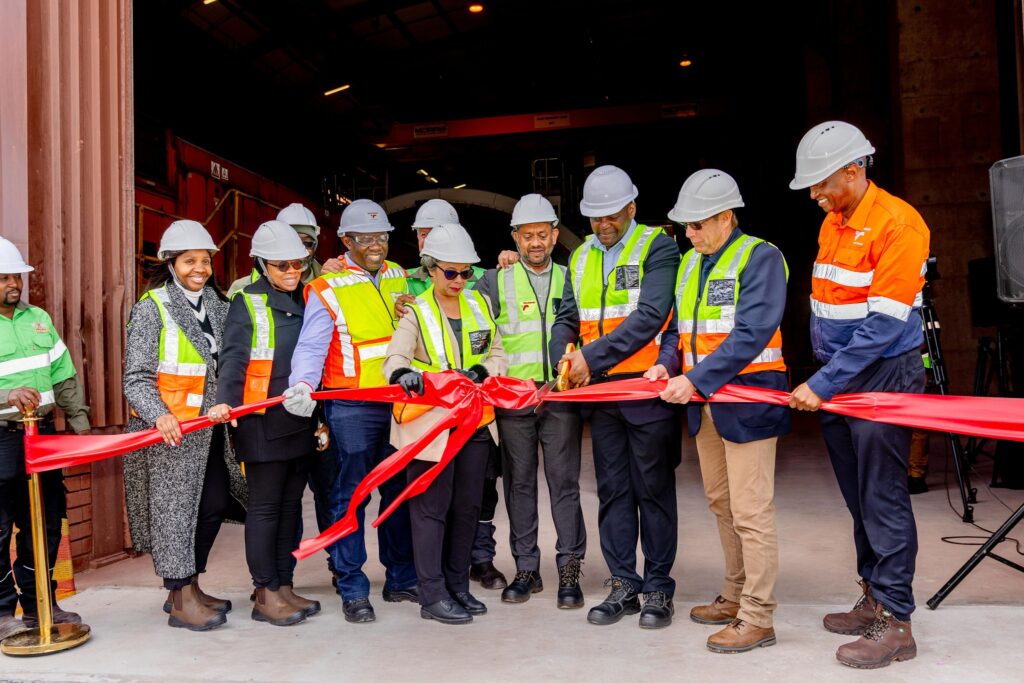
Transnet officials led by Group Chief Executive Michelle Phillips (front) during the installation of tippler 3 at the Saldanha Iron Ore Terminal on June 03, 2026. Photo courtesy: Transnet
As Transnet continues with measures to ensure efficient flow of iron flow from South Africa to Europe and other destinations across the world, measures are also being put in place to facilitate decarbonisation.
In October 2025, the Global Maritime Forum revealed that ammonia-fueled bulk carriers could probably be deployed on the South Africa-Europe iron ore trade route as soon as 2029, in what is known as the green corridor.
According to results of a feasibility study produced in collaboration with a consortium created in 2023 (which includes Anglo American, CMB.TECH, Freeport Saldanha, VUKA Marine and ENGIE), the corridor linking Saldanha Bay in the Western Cape to the Port of Rotterdam, Netherlands would be one of the first global south-to-north green shipping routes.
In the green corridor’s initial years, ammonia-fueled vessels would likely bunker in Rotterdam, which is one of the most mature ports in terms of its ammonia bunkering and safety frameworks. Meanwhile, Saldanha Bay will have the opportunity to build the infrastructure to become the long-term green ammonia production and bunkering hub for the corridor.
By 2035, the report says, the port could supply bunkering services to all corridor vessels locally, creating a dual-purpose facility that continues mineral exports while serving international shipping.
“This phased approach gives shipowners and fuel producers a clear timeline to work toward, and we now need coordinated action from policymakers and industry to make this a reality by 2029,” said Shanon Neumann, associate, investment facilitation at Freeport Saldanha.
“However, to help Saldanha Bay transition quickly, blending public and private funding can unlock investment in infrastructure and reduce the risks of early projects.”
With the World Bank and World Economic Forum (WEF) having previously identified South Africa as a prospective key player in fueling shipping’s decarbonization, the green corridor could contribute towards turning this notion into a reality.
Oliver Ochieng, Blue Africa News