The African Development Bank (AfDB) is serving as the lead project partner and key strategic financier for the initiative, that is set to transform the deep-water port.
By Blue Africa News
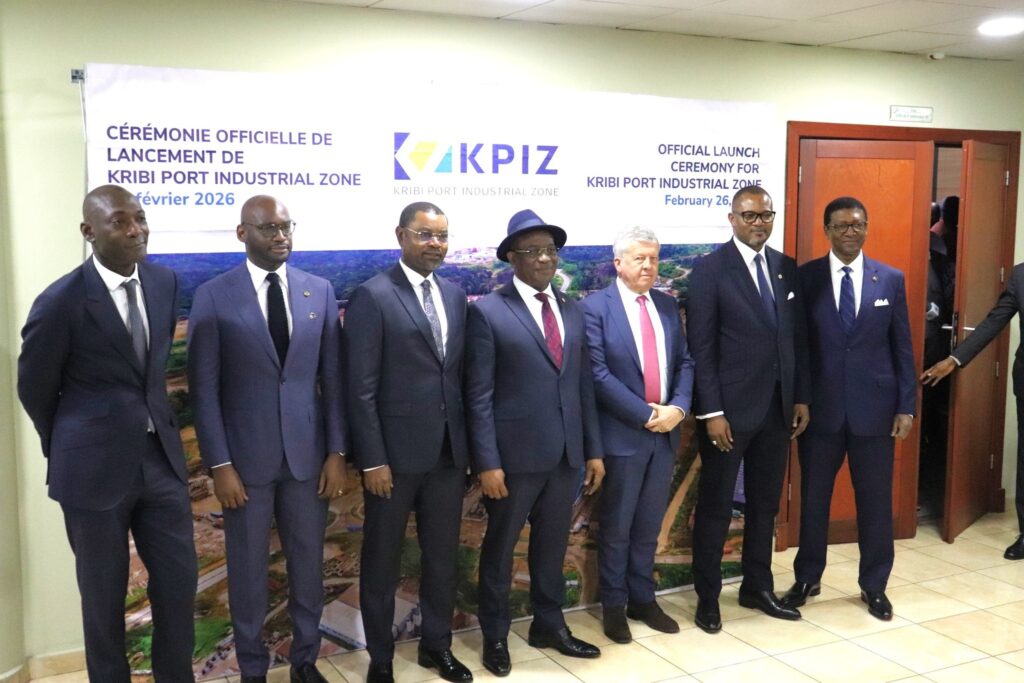
The development of an integrated industrial zone at the deep-water port of Kribi in Cameroon is gathering pace, following the unveiling of a dedicated company to oversee the project’s implementation.
Kribi Port Industrial Zone (KPIZ) is jointly owned by a consortium comprising the Port Autonome de Kribi (PAK), Africa Global Logistics (AGL), Arise Integrated Industrial Platforms (Arise IIP) and Belmont Investments.
Located in close proximity to the Kribi deep-sea port and covering nearly 4,000 hectares, the Kribi Port Industrial Zone occupies a strategic geographic position, an extensive hinterland into Central Africa, and strong potential for the development of industrial, logistics, port, and tourism activities.
Framed as a company dedicated to industrial, logistics and tourism development, KIPZ is charged with promoting the local processing of natural resources, and strengthening Cameroon’s competitiveness in the Gulf of Guinea.
AGL in a statement said the project includes the development of essential infrastructure such as road networks, energy, water supply, and telecommunications. It also includes the construction of a business and conference center, as well as modern logistics facilities and specialised industrial zones, with the total investment being capped at €795 million.
The zone, according to AGL, will play host to priority industries identified in the national development strategy, including steel and metal processing, timber and wood processing, aluminum and metallurgy, ceramics and construction materials, cocoa and agro-processing, textiles and garments, automobile assembly, plastics processing, cement production, cereals and food processing, and fisheries and related industries.
Touted as a major economic impact for Cameroon, AGL says KPIZ is expected to deliver significant economic benefits, ranging from the creation of an estimated 110,000 to 150,000 direct and indirect jobs, a potential contribution of 5% to 8% to Cameroon’s Gross Domestic Product (GDP) by 2040 and strengthening of regional logistics corridors linking Cameroon to Chad, the Central African Republic and Congo.
Other benefits include reduced logistics costs and improved national competitiveness and local value addition to mineral, agricultural, and forestry resources and enhanced positioning of Cameroon as an industrial and logistics hub in Central Africa.
“The development of KPIZ follows a responsible, inclusive, and sustainable approach. The consortium is working closely with Cameroonian authorities to ensure coherent and well-coordinated development around the Port of Kribi,” said AGL.
The African Development Bank (AfDB) group is serving as the lead project partner and key strategic financier for the initiative, with the bank committing to mobilising the entire €411 million required in public financing, besides positioning itself to support the mobilisation of €384 million in private sector investment, making it a total of €795.
“The state provides the strategic vision, stability and alignment with national priorities; the private sector brings capital, technical expertise, execution capacity and innovation; and the African Development Bank ensures financial leadership, structuring of the financing package and overall project coherence,” said Léandre Bassolé, Director General of the Bank’s Central Africa Regional Development, Integration and Business Delivery Office.
“Through this strategic investment, we aim, alongside the Government of Cameroon, to catalyse private sector investment, create sustainable jobs and strengthen the country’s competitiveness in regional and global markets,” added the Director General.
ADB will also provide high-level technical assistance, support local capacity building and ensure the integration of strong standards in energy efficiency, responsible resource management, and climate resilience.
AfDB’s involvement in the Kirbi industrial zone project continues the bank’s footprints across Africa.
In East Africa for instance, AfDB and other organisations among them GIZ, KFW, the European Union, UNEP and UNESCO played crucial technical and financial roles to make the construction of Lake Victoria Basin Commission (LVBC) headquarters in Kisumu to a tune of USD$3.54.
Oliver Ochieng, Blue Africa News