
ARC will operate on a line that runs to South Africa’s northeastern border with Mozambique, connecting the commercial hub of Gauteng province to the main port of Durban.
By Blue Africa News
The African Rail Company (ARC) is accelerating efforts to raise nearly R2.84 billion (about $170 million) to acquire trains and wagons, in a move aimed at strengthening South Africa’s transport and logistics sector.
Founded in 2013, ARC provides commercial freight rail transportation services across Southern Africa, with fuel transportation being at the core of its business. ARC prides itself as the largest fuel transporter by rail in both Mozambique and Zimbabwe, besides transporting bulk commodities.
The company is among 11 successful bidders for slots to operate trains on South Africa’s freight network, being part of the government’s R2 trillion drive to bring in private companies to boost efficiency.
As such, according to Chief Executive Officer (CEO) Youssef Elgonaid, ARC will operate on a line that runs to South Africa’s northeastern border with Mozambique, using tracks that connect the commercial hub of Gauteng province to the main port of Durban.
The CEO emphasised the need for the company to beef up its locomotives, adding that part of the funding will go to regional operations that move copper from mines in the Democratic Republic of Congo (DRC) to Mozambique’s Maputo port.
“We’re seeing massive excitement about the logistics space in part because of rising demand for critical minerals and the need to shift heavy cargoes away from road transport,” said the CEO during a recent interview, as quoted by the Daily Investor.
“Rail is the only solution overland for these corridors.” The company plans to raise about 30% of the $170 million in equity and the rest in debt,” he added.
Private equity firms especially from the Middle East, he noted, have shown an interest in providing funding. Last year, South Africa transport minister Barbara Creecy announced that 11 out of the 25 private train operating companies (TOCs) that had expressed interest in operating routes on Transnet’s rail network had met the requirements.
The announcement ended Transnet, South Africa’s rail, port and pipeline company’s monopoly over the country’s freight rail network, with ARC among the companies given a go-ahead to operate on some of the routes.
“This is not just about the allocation of rail slots, it is a step toward a future where our railways drive economic growth, job creation and sustainability,” said the minister.
The application process for a total of 41 routes across six corridors opened in December 2024 and closed in February, 2025, followed by a stringent evaluation process.
Allocations span 1 to 10 years with private operators projected to handle an additional 20 million tonnes of freight annually, beginning with the 2026-27 financial year, bringing South Africa closer to its 250 million-tonnes rail freight-target by 2029.
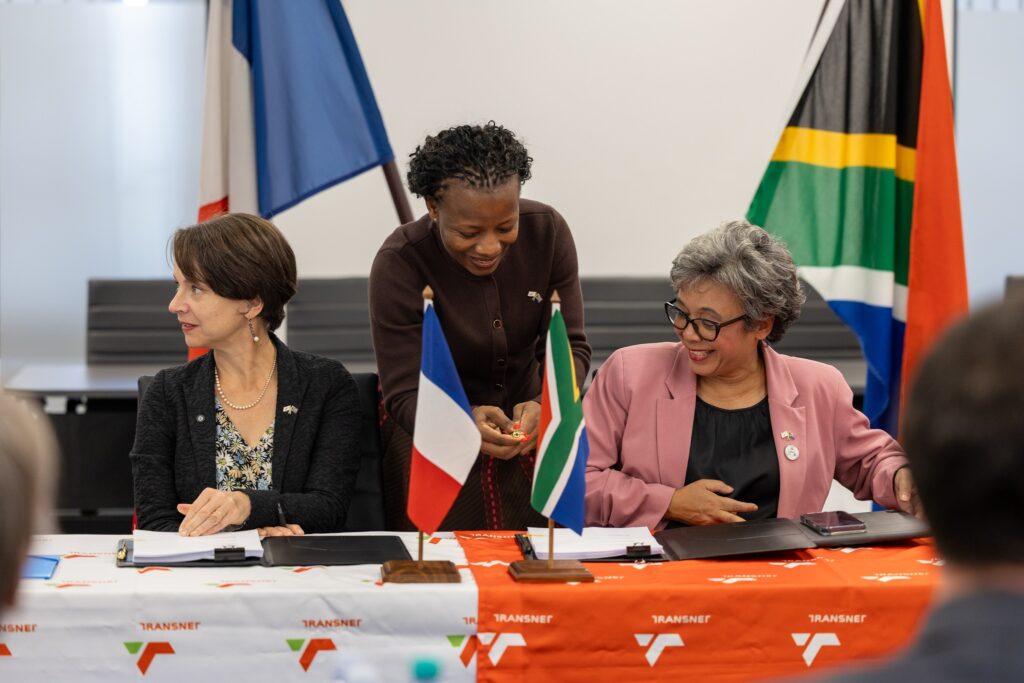
Meanwhile, Transnet on May 04, 2026 revealed in a media statement that the company and France, through the Agence Française de Development (AFD) had inked a EUR300M (approximately R5.8 billion) loan agreement to enhance the institution’s contribution to a more resilient and efficient South African economy in the face of climate change.
The loan will support “Transnet freight decarbonisation and corporate sustainability program,” which aims to strengthen its operational sustainability and advance the decarbonisation of South Africa’s freight sector.
“Transnet remains committed to modernising its rail and port infrastructure and operations to improve service quality, reliability and competitiveness, while advancing sustainable growth as part of its Reinvent for Growth strategy. This funding will assist in achieving these objectives by enhancing energy efficiency and accelerate reforms,” noted Michelle Phillips, Transnet group chief executive.
“The investments in freight rail recovery, port modernization and transition minerals export corridors are a demonstration that South Africa’s economic competitiveness and decarbonization goals are inseparable,” said Marie-Hélène Loison, AFD’s Regional Director for Southern Africa.
The loan deepens a long-standing partnership between the two entities, that traces its roots back to 2009, when AFD financed the expansion of Transnet’s Cape Town Container Terminal.
Oliver Ochieng, Blue Africa News