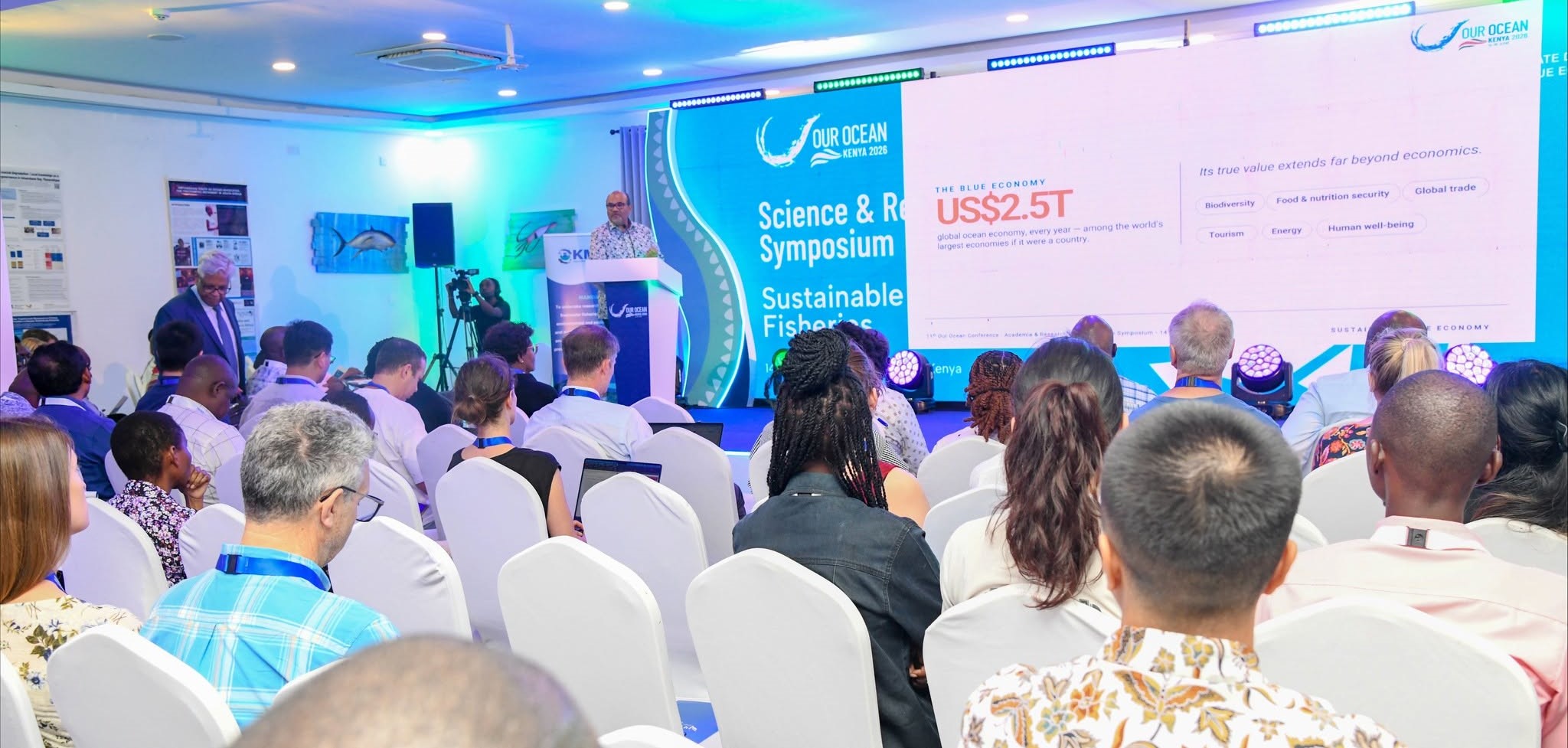


Kenya announced over 40 commitments worth an estimated $1 billion, while the World Bank announced plans to invest $1 billion over two years to support developing countries in building sustainable blue economies.
By Blue Africa News
The 11th Our Ocean Conference (OOC) concluded in Mombasa, Kenya on June 18, 2026 with 320 commitments and $6.4 billion mobilised for ocean action.
According to the organisers, 104 governments, businesses and civil society organisations announced 320 new commitments valued at $6.4 billion across marine protected areas, sustainable fisheries, the ocean-climate nexus, maritime security, marine pollution and the blue economy.
The conference – the first to be hosted on an African soil drew over 5,000 participants from across the globe, and placed African-led financing and implementation at the centre of the global ocean agenda, united under the theme of “Our Ocean, Our Heritage, Our Future.”
Hosts Kenya announced 42 commitments worth an estimated $1 billion, including a $200 million investment to install electronic monitoring across all industrial fishing vessels in its waters.
“Kenya stands ready to lead by example,” declared president William Ruto, fresh from attending the recently concluded G7 Summit in France.
“We commit to fully implement the 50 commitments we have made at this conference towards our blue economy valued at over $1.1 billion (approximately Sh142 billion),” he said.
He urged leaders present to do anything within their powers toward ensuring that what is delivered in water becomes the true measure of the conference’s success. “Let the true measure of this conference not be what we pledged on the shore, but what we deliver in the water.”
“We must find new and bolder ways of mobilising finance, harnessing technology and innovation, strengthen capacity, and accelerate the implementation of our shared commitments,” he added.
The World Bank Group on the other hand, announced plans to invest $1 billion over two years to support developing countries in building sustainable blue economies.
Noting that ocean protection is critical to safeguarding the planet, John Kerry, Our Ocean Conference founder and former United States of America Secretary of State said the ocean produces half of the oxygen humans breathe, supports billions of people, and absorbs much of the planet’s excess heat and carbon emissions.
He cautioned that climate change, rising ocean temperatures, plastic pollution and declining fish stocks pose a growing threat to marine ecosystems.
“Ocean degradation is no longer a future threat, but a present reality that is now a fundamental issue of global security and survival,” he said, criticizing what he termed as “historical treatment of the ocean as an afterthought in climate policy.”
Emelia Arthur, Ghana’s minister for fisheries and aquaculture insisted that Africa must stand together, work together, and succeed together in safeguarding its oceans and fisheries, announcing that the West African nation had established its first Marine Protected Area (MPA) at Greater Cape Three Points.
“Our ocean is our heritage and our future. It feeds us, provides jobs, and defines us. Today, Ghana is proud not only to report a promise fulfilled, but also to make a new commitment for the future,” she said.
According to the Intergovernmental Oceanographic Commission (IOC) of the United Nations Educational, Scientific and Cultural Organization (UNESCO), nearly 80% of all life on earth depends on the ocean, and more than 3 billion people rely on it for food and livelihoods.
However, only 8.4% of the ocean has been designated as protected, and just 2.8% is effectively protected. Hopes are high that the new commitments will boost ocean protection, especially in Africa.
“Illegal and unreported fishing costs Africa an estimated US$11-13 billion every year, and coastal nations in the Global South contribute less than 10% of global emissions while facing the harshest climate impacts. At the same time, the opportunity is immense: Africa’s ocean economy is projected to exceed US$400 billion by 2030,” says IOC.
OOC was launched in 2014 by U.S. Department of State and John Kerry as a major international platform that unites governments, businesses, Non-governmental Organizations (NGOs) and academic institutions, with a view of driving ocean-related action and ambition.
Canada was confirmed as host of the next Our Ocean Conference in 2027, followed by Jamaica in 2029.
Oliver Ochieng, Blue Africa News