
The West African country has a range of opportunities spanning traditional maritime industries and emerging offshore activities, offering new prospects to Ivorian youth.
By Blue Africa News
Ivory Coast is positioning its maritime sector as a source of jobs and investment for young people, with opportunities emerging in oil and gas, mining, fisheries, aquaculture, shipping and logistics.
Colonel Major Karim Coulibaly, director general of the Regional Academy of Marine Sciences and Technology (ARSTM) in Abidjan, said the country’s economic growth and expanding industrial activities continue to create demand for skilled workers across the maritime value chain.
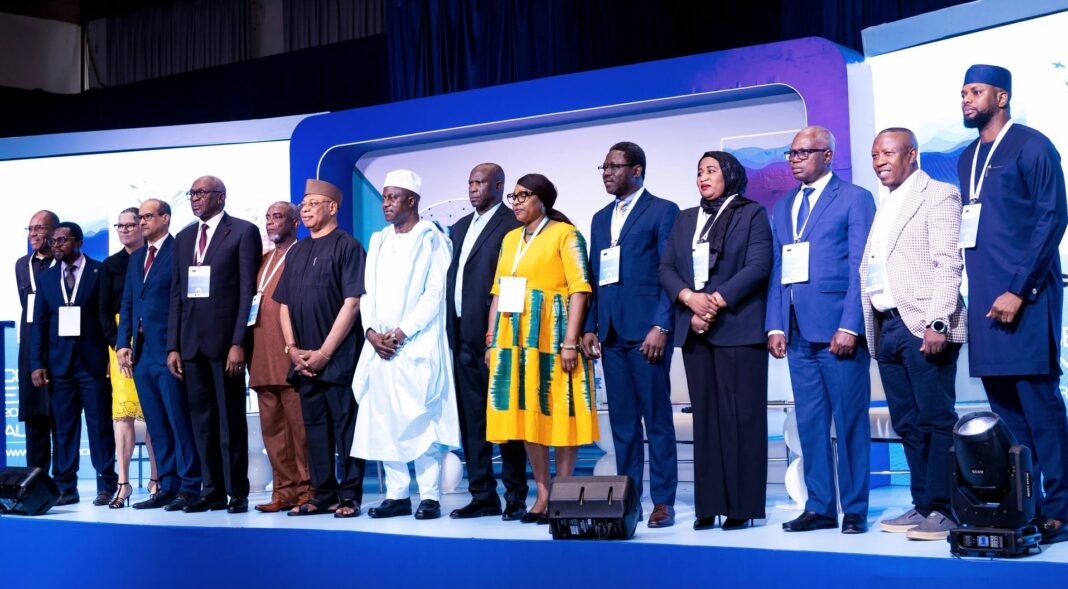
Speaking on the sidelines of the inaugural Blue Africa Conference and Exhibition (BACE) in Lagos Nigeria, Coulibaly described the ocean as an opportunity for young people, saying that specialised training would be critical to ensuring they benefit from emerging jobs.
“The blue economy is an ocean of opportunities for young people,” Coulibaly said, in French.
“The development of any country is reflected in its imports and exports. As a country develops, it needs to import more goods and export more products. All these activities pass through the maritime sector, creating numerous opportunities.”
With a coastline spanning more than 500 kilometers along the Gulf of Guinea in the Atlantic Ocean, Ivory Coast is one of West Africa’s major economies. The country has a range of opportunities spanning traditional maritime industries and emerging offshore activities.
The director general noted that young people needed the right skills and qualifications to take advantage of the initiatives, stating that the oil and gas industry is among the sectors offering new prospects, as the country advances its petroleum activities and develops its offshore capabilities.
“We are a fishing country with significant fisheries resources. There is considerable potential to develop activities in the fisheries sector as part of the blue economy. We also have petroleum resources. Today, Côte d’Ivoire has become an oil-producing country. This creates opportunities in offshore operations, including the installation and operation of offshore equipment. All these activities offer opportunities to young Ivorians.”
The mining industry, he added, is another potential source of employment, particularly in logistics and the movement of equipment and commodities.
To help bridge the skills gap, ARSTM has introduced a degree program in mining and petroleum logistics, aligning its training with the needs of an economy increasingly driven by extractive industries.
Without training, he emphasised, people cannot take advantage of the available opportunities.
“Maritime careers, navigation, petroleum and fisheries all involve specialised professions. You need the necessary skills and competencies to work in these fields,” the director said.
ARSTM is one of the institutions under the Maritime Organization of West and Central Africa (MOWCA), serving several countries in West and Central Africa. The countries include Benin, Burkina Faso, Cameroon, Central African Republic, Chad, Congo Brazzaville, Gabon, Guinea and Mali.
Beyond extractive industries, Coulibaly said the fisheries sector presents opportunities to expand production, strengthen value chains and create jobs, with the sector offering considerable potential, particularly through aquaculture.
He said shipping and logistics are at the heart of Ivory Coast’s blue economy growth, with the Port of Abidjan being at the centre of operations. In 2025, cargo volumes at the Ivorian port hit 46.9 million tonnes, up from 40.1 million, a 17% increase, as previously reported by Blue Africa News.
The performance, the port management said, is part of a demanding political-economic context, characterised by increased competition between West African ports, regional geopolitical tensions and a reconstruction of global logistics chains.
Coulibaly is not a stranger to issues pertaining Africa’s blue economy. He was one of the experts who developed the African Union’s blue economy strategy following the sustainable blue economy conference that took place in Nairobi, Kenya in 2018.
AU identified blue economy development as a priority goal towards achieving the aspiration of ‘A prosperous Africa’ based on inclusive growth and sustainable development within the context of the Africa Union Agenda 2063.
For Ivory Coast, the challenge now is to translate its expanding maritime and offshore activities into accessible employment, business opportunities and sustainable economic growth.
Tom Kirkwood and Oliver Ochieng, Blue Africa News