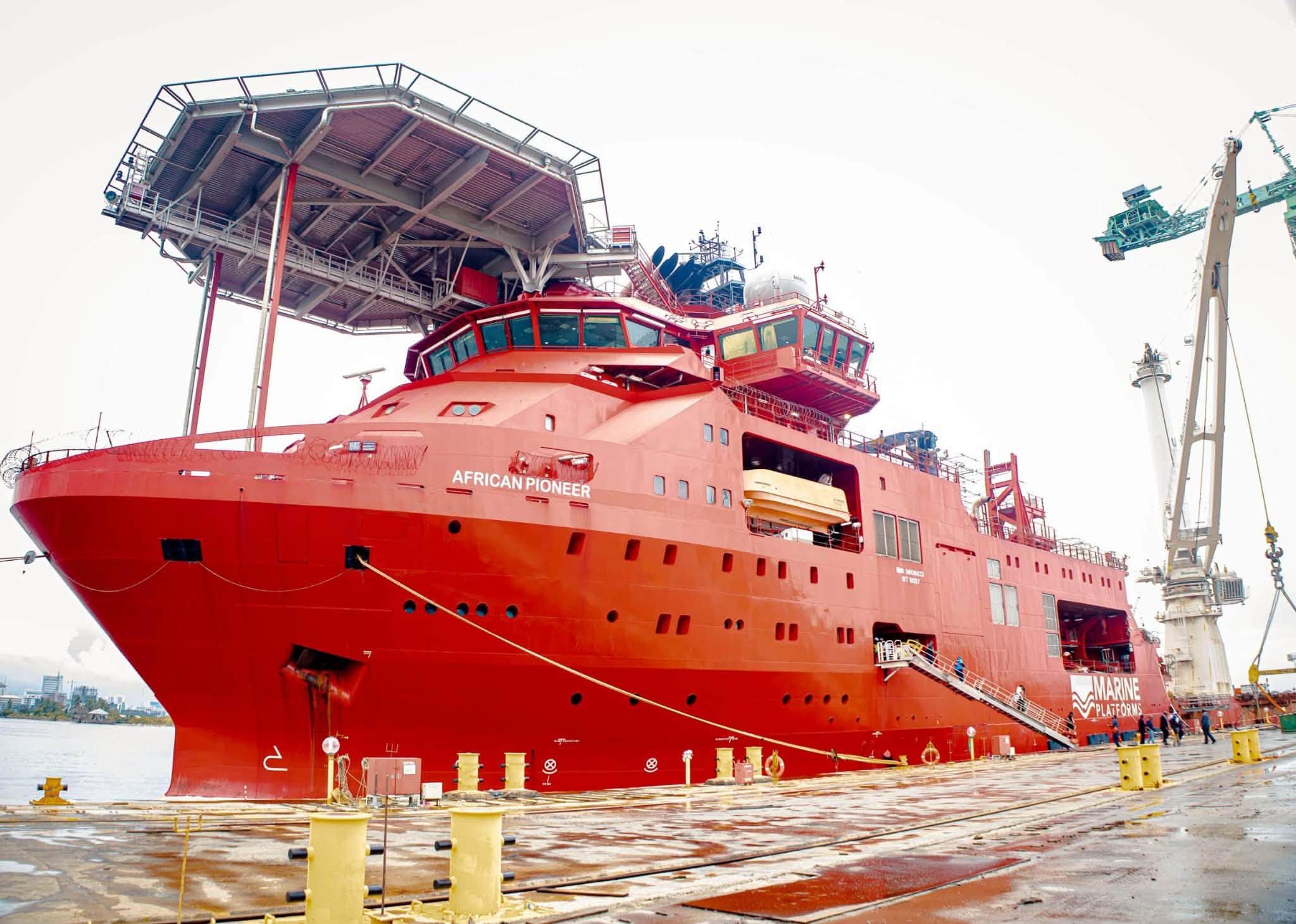


Ethiopia faces multifaceted challenges due to the absence of a sustainable and regulated sea outlet. The country heavily relies on Djibouti’s ports for maritime trade.
By Blue Africa News
Ethiopian Prime Minister Abiy Ahmed has framed his country’s push for access to the sea as an economic imperative, arguing that the landlocked country’s growing economy needs direct access to maritime trade routes.
Speaking during the recently concluded 18th BRICS Summit in New Delhi, India, attended by leaders from the 11 member nations (Brazil, China, Egypt, Ethiopia, India, Indonesia, Iran, Russia, Saudi Arabia, South Africa and the United Arab Emirates), Ahmed said access to the sea is key in helping his nation to lower trade costs.
“For Ethiopia, access to the sea is first and foremost an imperative. As a large and growing economy, we need reliable and diversified access to international trade routes,” the PM said as per Business Insider Africa.
Perhaps riding on the Summit’s theme of “Building for resilience, innovation, cooperation and sustainability,” Ahmed said they will continue to pursue the objective through peaceful and negotiated arrangements.
“Ethiopia will continue to pursue this objective through peaceful and negotiated arrangements. Our aim is to lower trade costs, build greater resilience and advance shared prosperity. Dear friends, BRICS will matter most when the decision taken here changes what a country can build, what a business can reach and what a young person can imagine. That is the future Ethiopia stands ready to build.”
Ethiopia lost direct sovereign access to the Red Sea in 1993, following the independence of Eritrea. Officials in Eritrea continue to push back against Addis Ababa’s push to access the Red Sea, terming sovereign access initiatives as a threat to territorial integrity.
Africanlegalstudies.blog notes that Ethiopia faces multifaceted challenges due to the absence of a sustainable and regulated sea outlet. The country heavily relies on Djibouti’s ports for maritime trade.
“The dependency has proven economically burdensome, with Ethiopia incurring an estimated $1.6 billion annually in port fees. Additionally, Ethiopia’s landlocked status has heightened its national security vulnerabilities, exposing it to both emerging and entrenched external powers that establish military bases along the Red Sea.”
According to peace and security expert Temesgen Thomas, an Associate Professor at Ethiopia’s Wachemo University, Ethiopia previously possessed access to the sea and exercised influence over the Red Sea and the wider region.
“The loss of that access, therefore, was not simply a geographical change. It fundamentally altered Ethiopia’s strategic position and continues to shape how many Ethiopians understand the country’s place in the region,” he said, as quoted by Gazette Plus.
“A port is a matter of survival for a country. Being landlocked means a nation’s sovereignty cannot be complete,” he said, explaining that a country without direct maritime access must rely on other states for the movement of goods.
“Such dependence can create vulnerabilities because transit arrangements are ultimately subject to the decisions and circumstances of other countries. If something arises at any given moment and the transit country decides to deny passage, where does that leave us?”
The expert pointed to Ethiopia’s geographical proximity to the Red Sea as one of the strongest reasons the push to access it carries a moral weight. “What makes it a moral question is our proximity to the sea outlet,” he said, adding that “Ethiopia’s maritime access is not a threat to anyone but rather an opportunity.”
The calls to Ethiopia’s access to the sea are gaining momentum. Recently, Israel’s Ambassador to Ethiopia, Avraham Neguise said that the country’s push to access the Red Sea is essential for the security of international maritime trade routes and the economic growth of the region.
“Israel is behind Ethiopia in this effort. This is clear Israeli policy. Access to the sea is important for Ethiopia to strengthen its economy, safeguard its sovereignty and foster regional security,” the Ambassador said.
Chad is the largest while Ethiopia is the most populous landlocked country in Africa. The other 14 landlocked countries in Africa are: Botswana, Burkina Faso, Burundi, Central African Republic, Eswatini, Lesotho, Malawi, Mali, Niger, Rwanda, South Sudan, Uganda, Zambia and Zimbabwe.
Oliver Ochieng, Blue Africa News